Dental Implants & Oral Surgery in Westfield Center, OH
Dental Implants & Oral Surgery in Westfield Center, OH

At Westfield Center Dental Care, Dr. Bhardwaj handles the surgical side of your treatment, including placing the implant, performing any extractions, and managing bone grafting if needed. If you're nervous about the procedure, sedation is available. Dr. Hall then takes over to design and place your final crown. Both doctors are in the same building, working on your case together, so your surgical plan and your finished tooth are built as one coordinated process from day one.
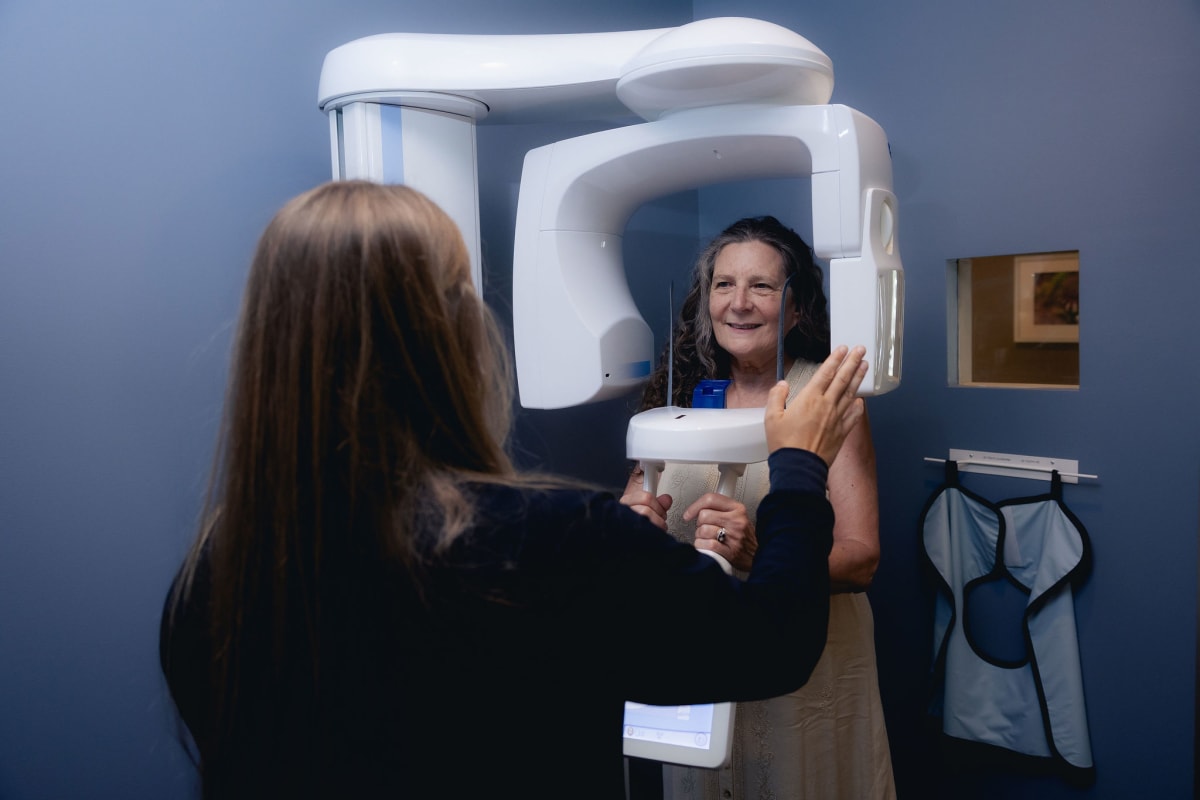
Call us at (330) 887-1777 to schedule a consultation with Dr. Bhardwaj and Dr. Hall. We'll take a cone beam scan, walk you through exactly what your case involves, and give you a written estimate before you commit to anything.
Before You Read Further
- Everything happens here. Dr. Bhardwaj places the implant; Dr. Hall designs and fits the crown. No referrals, no separate offices.
- Bring your medical history and a current medication list to your consultation, as both help us plan the right approach for you.
- Anxiety is common. Sedation is available at every stage, and we'll walk you through your options before anything is scheduled.
- Your plan is built from a cone beam 3D scan of your actual jaw, not a generic estimate.
- You'll receive a written cost estimate before you commit to anything.
How Implant Treatment Works, Step by Step

1. Consultation and 3D Imaging
Your first visit includes an exam and a cone beam scan, a 3D map of your jaw that shows available bone, nerve and sinus positions, and the condition of surrounding teeth. We walk you through the findings in plain language and won't schedule anything until you're comfortable with the plan.
2. Any Groundwork First
Not everyone needs this step, but if you do, you'll know from the start. A failing tooth comes out first. Thinned bone gets rebuilt with a graft so your own bone has a scaffold to grow around. Any gum disease gets treated. No surprises partway through.
3. Implant Placement
The area is fully numbed before anything starts. You'll feel pressure, not pain. Sedation is available if you'd like to be more at ease. Dr. Bhardwaj places the titanium post through a small opening in the gum, and most single-implant appointments are quicker than patients expect.
4. Healing and Fusion
Over the next few months, your bone grows around the post and fuses to it. This is what gives implants their long-term durability. If the gap is in a visible spot, you'll have a temporary restoration while you heal.
5. The Final Crown
Once the implant has fused, Dr. Hall takes a digital scan and designs your crown to match the color and shape of your surrounding teeth. She places it and fine-tunes the fit. You leave with a tooth that looks, feels, and functions like the real thing.
Extractions, Grafting, and the Surgical Work That Makes Implants Possible
Many patients don't realize that getting an implant sometimes means taking care of a few things first. If a tooth is failing, it needs to come out. If the bone in that area has thinned over time, it may need to be rebuilt before an implant can go in. None of that means you're not a candidate. It just means there's a bit of groundwork to do.
- Simple Extractions: If the tooth is visible and accessible, taking it out is usually quick and straightforward. Most patients are surprised by how easy it is.
- Surgical Extractions: If a tooth is broken below the gumline, impacted, or has roots that make removal more complex, a more involved approach is needed. Dr. Bhardwaj handles these in-office with no referral required.
- Bone Grafting: When a site has lost volume from tooth loss or infection, a graft gives your own bone a scaffold to grow in and around, rebuilding the foundation an implant needs to hold securely for the long term.
- Sedation: Nitrous oxide and oral conscious sedation are available for any of these procedures. If the surgical side of treatment has been holding you back, we talk through your options at your consultation so you feel comfortable before anything is scheduled.
Eating, Smiling, and Forgetting It Is Even There
What most patients really want to know is what life looks like on the other side. Here is what changes when a permanent tooth is in place.
- You Can Eat Normally Again. The implant anchors into your jawbone, so steak, apples, and corn on the cob are no longer something you have to think around.
- Your Healthy Teeth Stay Healthy. A bridge requires reshaping the teeth on either side. An implant stands on its own and leaves neighboring teeth untouched.
- Your Jawbone Stays Intact. A missing tooth root means the bone beneath it slowly shrinks. An implant restores that stimulation and helps preserve the shape of your jaw over time.
- It Stays in Your Mouth Permanently. No removing it at night, no adhesive. It is just a tooth.
- It Looks Like It Belongs There. Dr. Hall designs the crown digitally to match the shade and shape of your surrounding teeth so it blends in naturally.
Getting Ready and Healing Well
Before Your Procedure
Eat normally unless we've told you otherwise. If you're having sedation, we'll send fasting instructions and you'll need a ride home. Let us know about blood thinners, bisphosphonates, or any recent changes to your health. Stock your fridge with soft foods before you come in.
The First Few Days
Some soreness and swelling is normal and expected. Ice and the medication plan we send home with you handle most of it. Stick to soft foods, avoid straws and smoking, go easy on exercise, and rinse gently. If something feels off: more pain than expected, unusual swelling, anything that doesn't seem right, call us. We'd rather hear from you early.
Caring for It Long Term
The crown itself can't get a cavity, but the gum and bone around it still need care. Brush and floss it like any other tooth, keep up with your cleanings, and wear a nightguard if you grind. Do those things and your implant is built to last.
What Does a Dental Implant Actually Cost?
Implant treatment isn't one size fits all, and the cost reflects that. The final number depends on how many implants you need, whether a tooth needs to come out first, whether the site requires a bone graft, what the final restoration looks like, and whether you'd like sedation.
Insurance coverage varies by plan. Surgical placement is often partially covered, and related work like extractions or the crown may be covered in part. We'll review your benefits and give you a written estimate before you commit to anything. If paying all at once isn't realistic, we have options to spread the cost over time.
What's Different About Getting Implants Here

Most patients in this area have had to drive to a bigger city for the surgery, then visit a separate office for the crown. That's not how it works here.
- Everything Under One Roof. Dr. Bhardwaj handles the surgical side: implant placement, extractions, bone grafting, and sedation. Dr. Hall designs and fits your final crown using digital technology. They work together in the same building, so your treatment is one coordinated plan from start to finish.
- No Judgment, No Pressure. What patients mention most isn't the technology; it's how they felt walking in. If it's been a while, or a past experience has made you hesitant, you won't be lectured. Just an honest conversation about where you are and what makes sense for you.
FAQs About Dental Implants & Oral Surgery
Does Getting a Dental Implant Hurt?
The area is fully numbed before placement, so you'll feel pressure, not pain. Nitrous oxide and oral conscious sedation are available if you'd like additional comfort. Some soreness and mild swelling for a few days afterward is normal.
How Long Do Dental Implants Last?
The titanium post that fuses to your jawbone is designed to last a lifetime with normal care. The crown on top may eventually need replacing, but that is a straightforward appointment compared to the original treatment.
I've Lost Bone in That Area. Am I Still a Candidate?
Most of the time, yes. A bone graft can rebuild the site by providing a scaffold for your own bone to grow in and around, restoring the volume needed to support an implant. A cone beam 3D scan at your consultation shows us exactly what we are working with.
How Is a Dental Implant Different from a Bridge?
An implant is a standalone tooth anchored in the jawbone that leaves neighboring teeth untouched. A bridge fills the gap by anchoring to adjacent teeth, which must be reshaped to support it. Both can be the right choice depending on your case, and we will walk you through the options.
Can a Tooth Be Extracted and Replaced with an Implant the Same Day?
Sometimes. It depends on the level of infection present and how much healthy bone remains after extraction. Your imaging will tell us, and we will let you know well before your appointment.
What Oral Surgery Procedures Does Westfield Center Dental Care Offer?
Dr. Bhardwaj performs simple and surgical extractions and bone grafting in-office. All surgical work is coordinated with your implant plan so treatment moves forward as one connected process, with no referrals to outside offices.
Ready to See What Your Case Involves? Here Is How to Start
Your first appointment is just a conversation. You'll see your own 3D images, hear exactly what we'd recommend and why, and walk away with a written estimate and a plan that makes sense to you. If the timing isn't right, that is completely fine. No pressure at all.
Dr. Bhardwaj, Dr. Hall, and the rest of our team would love to meet you at our Westfield Center office on Virginia Drive. We are here Monday through Thursday and happy to answer any questions before you book. Call us at (330) 887-1777 whenever you are ready. No rush