Dentures in Westfield Center, OH
Dentures in Westfield Center, OH
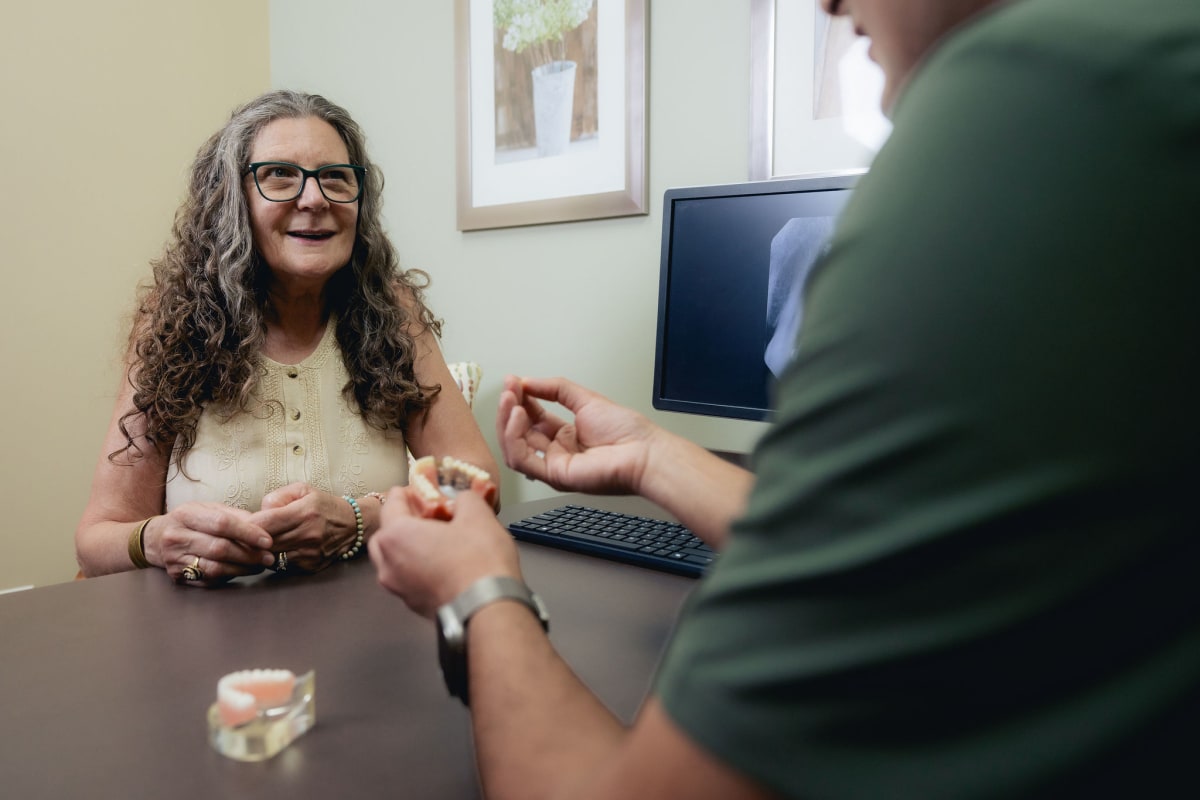
When you've lost most or all of your teeth, whether it happened gradually or all at once, the goal isn't just to fill the space. It's to get back what went with it: being able to bite into food without thinking about it, speaking clearly, and looking like yourself again. At Westfield Center Dental Care, Dr. Hall and Dr. Sahil use digital scans and 3D imaging to design dentures around the actual shape of your jaw and bone, not a one-size-fits-all mold.
If you've been quietly working around missing teeth, chewing on one side, avoiding certain foods, or holding back your smile, you already know how much it affects everyday life. What you might not realize is how much a well-made denture can fix. Chewing gets easier. Speech clears up because the gaps that were disrupting airflow are finally filled. We'll walk you through all your options, including whether anchoring the denture to implants makes sense for your situation, and help you land on a plan that actually fits your life.
Ready to find out what's possible? Call Westfield Center Dental Care at (330) 887-1777 to schedule a denture consultation. We're in Westfield Center, an easy drive for patients across Medina, Wayne and Cuyahoga counties.
What Most Denture Patients Wish They'd Known Sooner
- There are two main options. Full dentures replace an entire arch of teeth. Partials fill in the gaps while keeping your remaining healthy teeth in place.
- Stability is worth asking about early. Bone loss after tooth loss can make a traditional denture feel loose over time. Implant-supported dentures solve that, and Dr. Bhardwaj places them right here, no referrals needed for most cases.
- Plan for a few visits over several weeks. If teeth need to come out first, healing time is built into your schedule. We'll tell you exactly what to expect from the start.
- Follow-up adjustments are part of the process. Sore spots usually show up at home during real meals, not in the chair. We schedule a follow-up for exactly that reason.
- It starts with a simple consultation. We review your gums and bone, walk through your options, check your benefits, and give you a clear cost before you decide anything.
Dentures Step by Step: No Surprises, No Guesswork
1. Consultation and Exam
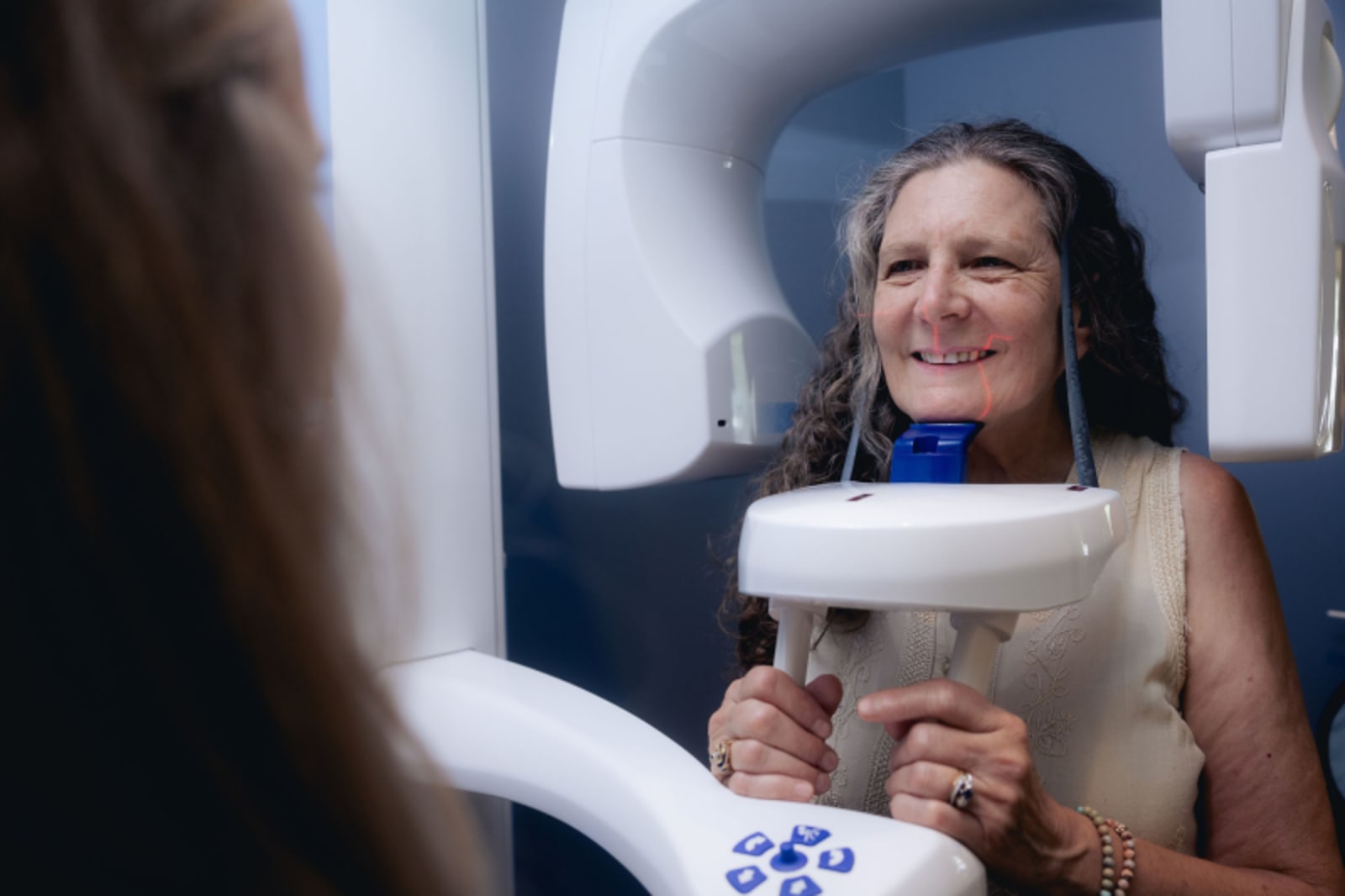
We look at your remaining teeth, gums, and jawbone using 3D imaging to see bone height and density. That tells us how well a denture will fit and whether implant support makes sense for your situation.
2. Any Prep Work First
If teeth need to come out or gum health needs attention first, Dr. Hall and Dr. Sahil handle it right here. No referrals, no starting over. If extractions feel daunting, we offer nitrous oxide and oral conscious sedation to keep you comfortable.
3. Impressions and Measurements
We capture the exact shape of your mouth and how your jaws come together using digital scanning, no goopy impression trays. These measurements are what make your denture fit you specifically.
4. Try-In and Design
Before anything is finalized, you see and feel a trial version in place. We check your bite, lip and cheek support, and whether the tooth shape and shade look right for your face. This is the time to speak up, adjustments here are easy.
5. Delivery and Follow-Up
We seat your dentures, watch how you bite and speak, and fine-tune anything that feels off. Then we bring you back after a few real meals, because that's when you find out how they truly feel day to day.
More Than Filling a Gap: What Dentures Restore
- You can actually enjoy meals again. Dentures won't feel exactly like natural teeth, but most patients are surprised by how much easier eating becomes. No more avoiding certain foods or chewing carefully on one side.
- Talking feels normal again. Missing teeth change the way air moves through your mouth, which can cause whistling or words that come out less clearly than you'd like. Once those gaps are filled, most people notice their speech settles back to normal within a few weeks.
- Your face looks like you again. When teeth are missing, the cheeks and lips lose their support and start to sink inward, which can make you look older than you are. A well-made denture fills that space back out, and it's one of the things patients notice most.
- Your remaining teeth stop shifting. If you're getting a partial, this one matters a lot. Teeth naturally drift toward open space over time. A partial denture holds that space so your healthy teeth stay where they belong.
- Keeping them clean is easy. Because dentures come out, you clean them the same way you'd clean a retainer, with no complicated routine.
- You're not locked into one option forever. If you decide down the road that you'd like more stability, implants can often be added to secure your existing denture without having to start the whole process over.
Week by Week: What the Process Looks Like Start to Finish
The First Visit
We review your gums and bone with imaging and leave you with a treatment plan and a realistic timeline before you walk out the door.
If Teeth Need to Come Out First
If extractions are needed, we build healing time into your schedule from the start. Most patients can wear an immediate denture during that period, so you're never without teeth.
The Middle Visits
This is where your denture takes shape. We capture impressions, record your bite, and do a try-in so you can see and feel the teeth before anything is finalized. These visits are spaced a week or two apart and are your chance to weigh in on fit and appearance.
Delivery and Settling In
We seat your dentures, check your bite and speech, and fine-tune anything that feels off. A few short follow-up visits over the next month are built into the process as your gums settle. Most straightforward cases wrap up within a few weeks.
Budgeting for Dentures: What You Need to Know Before You Commit
What you'll pay depends on your specific situation: the type of denture you need, whether any teeth need to come out first, the materials used, and whether implant support makes sense for you. Once we've examined your mouth, we'll give you a real number before you decide anything.
Most insurance plans cover at least part of denture treatment. Our team will check your benefits and walk you through exactly what's covered and what you'd owe. If cost or timing is a concern, just bring it up and we'll work through the options with you.
What Makes Getting Dentures Here Different
Most denture cases need both surgical and restorative expertise. Here, you get both under one roof.
- Two dentists, complementary skills. Dr. Hall and Dr. Sahil handle implant placement, oral surgery, and sedation. Our team focuses on fit, function, and how your teeth look. No referrals, no starting over somewhere else.
- Precision imaging. We use digital scanning and cone beam imaging to build your denture around your actual jaw anatomy, not a rough estimate.
- Sedation available. If anxiety has been holding you back, Dr. Hall and Dr. Sahil offer nitrous oxide and oral conscious sedation right here in the office.
- No judgment, no rushing. We don't care how long it's been since your last visit. And we don't sign off on a fit until it actually feels right for you.
FAQs About Dentures
How Long Do Dentures Last?
Most dentures last five to ten years. As your jawbone gradually reshapes after tooth loss, the fit changes. A reline (refitting the base) can often extend the life of a set that is otherwise in good shape.
Will They Look Natural?
Yes. At your try-in appointment, we review tooth shape, size, and shade together before anything is finalized. A little natural variation actually looks more realistic than a perfectly uniform row.
Can I Eat Normally With Dentures?
For most foods, yes. Plan for a few weeks of adjustment, starting with softer foods. Very hard or sticky foods stay challenging, especially with a lower denture. If eating is still difficult after a month or two, implant support is worth discussing.
What if My Dentures Feel Loose?
Come in rather than relying on adhesive. Loose dentures cause sore spots and can accelerate bone loss over time. The fix is usually a simple adjustment or a reline, and we will tell you exactly which one you need.
Do I Still Need Checkups if I Have No Natural Teeth Left?
Yes. Your gums, bone ridge, and soft tissue still need regular attention, including oral cancer screenings. We also check your dentures for wear and fit at every visit so small issues are caught early.
How Do Dentures Compare to Implants or a Bridge?
Dentures replace a full arch, are removable, and cost less upfront. Implants are fixed in the jaw, feel closest to natural teeth, and require healthy bone. A bridge is a fixed option for smaller gaps, anchored to surrounding teeth. Implant-supported dentures combine both: snapped onto implants for stability but still removable for cleaning. Dr. Sahil and Dr. Hall can walk you through every option in a single visit.
Let's Get You Comfortable Again
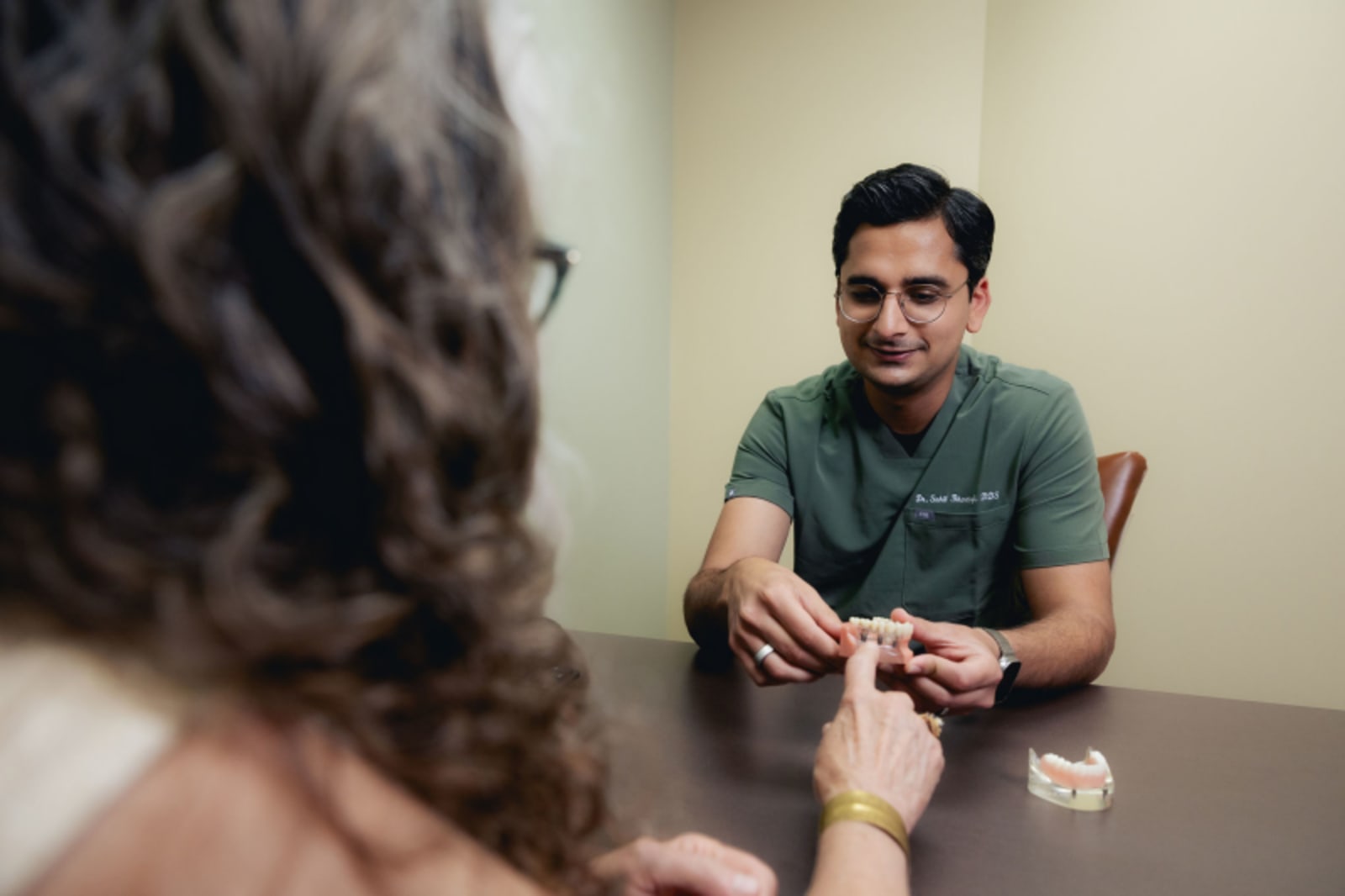
Whether you're just starting to look into dentures or you're dealing with a set that hasn't been working for you, we're here to help you figure out what comes next. Dr. Sahil and Dr. Hall take the time to actually listen, with no rushing and no pressure. Bring every question you have, even the ones that feel too basic to ask. There's no such thing here.
Call us at (330) 887-1777 to schedule a consultation at Westfield Center Dental Care, located at 8481 Virginia Dr., Westfield Center, OH. We would love to help you get back to feeling like yourself again.